
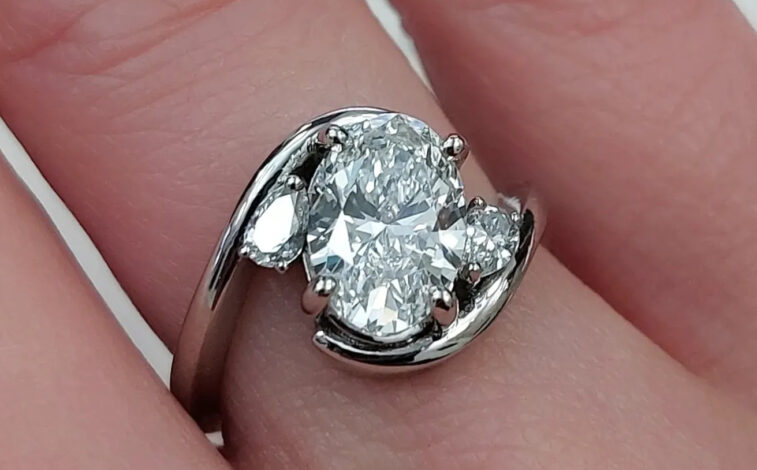
When purchasing a diamond—whether for an engagement ring, a gift, or an investment—understanding its value is crucial. That’s where the 4Cs come in: Cut, Color, Clarity, and Carat Weight. Developed by the Gemological Institute of America (GIA), the 4Cs serve as a universal standard for evaluating diamond quality. Mastering these four characteristics will help you make a more informed, confident decision when choosing a diamond.
Table of Contents
1. Cut: The Sparkle Factor
The cut of a diamond doesn’t refer to its shape (such as round or oval), but rather how well it has been faceted and proportioned to reflect light. This is arguably the most important of the 4Cs because it directly affects a diamond’s brilliance, fire, and scintillation.
A well-cut diamond will reflect light internally from one facet to another and disperse it through the top of the stone, creating that signature sparkle. If the cut is too shallow or too deep, light will escape from the sides or bottom, making the diamond appear dull.
GIA grades cut on a scale from Excellent to Poor, with most high-quality 4cs of diamonds falling into the Excellent to Very Good range. Even if a diamond has perfect color or clarity, a poor cut can drastically reduce its visual appeal.
2. Color: Less Is More
When it comes to color in white diamonds, the less color, the higher the value. The GIA grades diamond color on a scale from D (colorless) to Z (light yellow or brown). Completely colorless diamonds (grades D, E, and F) are extremely rare and therefore the most expensive.
However, many buyers find near-colorless diamonds (grades G through J) offer a good balance between beauty and value. The color difference between adjacent grades is often subtle and difficult to detect with the naked eye, especially once the diamond is set in a ring.
Note: Fancy colored diamonds (like pink, blue, or yellow) are graded differently, and in those cases, more intense color increases value.
3. Clarity: Natural Inclusions
Clarity measures the presence of internal inclusions or external blemishes in a diamond. While most diamonds have some imperfections—known as “nature’s fingerprints”—the fewer they have, the higher the clarity grade.
The GIA clarity scale includes:
-
FL (Flawless)
-
IF (Internally Flawless)
-
VVS1 and VVS2 (Very, Very Slightly Included)
-
VS1 and VS2 (Very Slightly Included)
-
SI1 and SI2 (Slightly Included)
-
I1, I2, I3 (Included)
For most buyers, a diamond in the VS1 to SI1 range offers good clarity at a more affordable price. In these grades, inclusions are usually not visible to the naked eye and require magnification to detect.
4. Carat Weight: Size Matters—But It’s Not Everything
Carat weight measures a diamond’s weight, not necessarily its size, although heavier diamonds are usually larger. One carat equals 200 milligrams. Diamonds are also sold in points, where 100 points equal one carat (e.g., a 0.75-carat diamond is 75 points).
Larger diamonds are rarer and thus more expensive. However, size isn’t everything. A smaller diamond with an Excellent cut can look more brilliant than a larger one with a Poor cut. Also, man made diamonds, some buyers prioritize balance and elegance over sheer size.
Conclusion: Choosing the Right Diamond for You
Understanding the 4Cs empowers you to select a diamond that best suits your budget and personal preferences. It’s not always about choosing the highest grade in every category; it’s about finding the right combination that gives you the best overall appearance and value.
Whether you’re investing in a timeless piece or celebrating a special occasion, let the 4Cs be your compass in navigating the sparkling world of diamonds.